Outdoor Smart GPS Trackers for Diverse Use Cases
Built for sun, rain, and rough terrain — rugged GPS devices that keep vehicles, workers, and assets always on your radar.
Requirements for Accurate Outdoor Tracking
Accurate outdoor tracking relies on three key factors: reliable satellite positioning, stable wireless communication, and efficient power management. Together, they determine positioning accuracy, data transmission stability, tracking frequency, and device operating time across vehicles, personnel, pets, assets, and other mobile targets.
GPS Satellite Positioning Capability
GPS satellite positioning is the foundation of outdoor tracking, allowing a device to determine its location through signals received from GNSS satellites. Positioning performance depends on the GNSS chipset, antenna sensitivity, satellite visibility, acquisition speed, and surrounding environment. Vehicle trackers typically require stable positioning during continuous movement, while pet, personnel, and pigeon trackers place greater emphasis on compact size, low power consumption, and reliable positioning in changing outdoor conditions.
For tracking applications that require higher reliability, multi-constellation GNSS support can improve satellite availability by using systems such as GPS, GLONASS, Galileo, or BeiDou. Positioning frequency should also match the application: frequent updates are useful for vehicle and fleet monitoring, while lower-frequency positioning can help extend battery life for small wearable or animal trackers.
Stable Wireless Communication
GPS determines the device's location, but wireless communication is responsible for transmitting that location data to the tracking platform. Cellular networks such as 4G LTE, LTE-M, or NB-IoT can be used depending on the device design, deployment region, coverage requirements, and data volume. A tracker with accurate positioning but unstable network communication cannot provide continuous and reliable remote monitoring.
For vehicle fleets, stable cellular connectivity supports frequent location updates, route monitoring, and operational data transmission. For personnel, pet, and pigeon trackers, communication efficiency becomes more important because devices are usually smaller and have limited battery capacity. SIM compatibility, network coverage, antenna performance, transmission frequency, and communication protocol should therefore be considered together when selecting an outdoor tracking solution.

Reliable Power Supply
Power management directly affects how long an outdoor GPS tracker can operate and how frequently it can report location data. Vehicle trackers can usually connect directly to the vehicle's power system, allowing continuous operation and frequent positioning. Battery-powered devices, such as personnel, pet, and pigeon trackers, require a balance between battery capacity, device size, positioning frequency, wireless transmission, and standby time.
Efficient power management can reduce unnecessary positioning and communication activity when continuous tracking is not required. Features such as sleep modes, scheduled positioning, motion detection, and adaptive reporting intervals can help extend battery life. For long-term outdoor deployments, battery performance should therefore be evaluated together with the required tracking frequency and actual usage environment.
Common Applications of Outdoor Tracking Systems
Outdoor GPS tracking systems can be adapted to different moving targets and operational requirements. From vehicle fleets and mobile personnel to pets, assets, and small animals, different tracker designs can provide location monitoring, movement records, geofencing, and status information. The appropriate device depends on the target being tracked, required positioning frequency, communication coverage, power source, and installation environment.
Vehicle Fleet Tracking
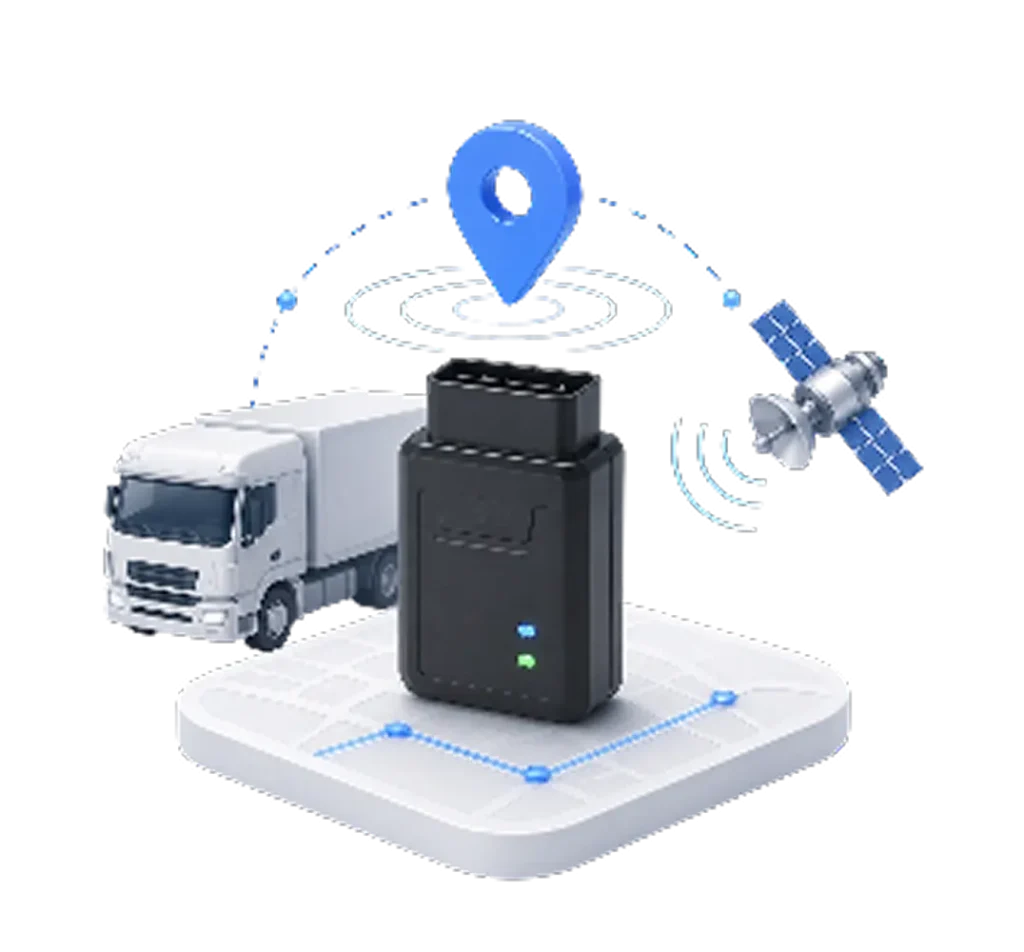
Vehicle GPS trackers provide continuous location and movement data for cars, trucks, buses, motorcycles, and commercial fleets. Fleet managers can monitor vehicle positions, historical routes, driving activity, and geofence events through a tracking platform, helping improve dispatch efficiency, route visibility, and vehicle utilization.
Outdoor Personnel Tracking
Wearable and compact GPS trackers can be used to monitor personnel working or traveling outdoors. Location updates and geofencing can support worker safety, lone-worker monitoring, field operations, and location-based alerts, particularly where personnel need to remain connected while moving between different outdoor areas.
Asset Tracking Management
GPS asset trackers help monitor mobile equipment, trailers, containers, machinery, and other valuable assets outside fixed facilities. By recording location and movement information, businesses can identify asset positions, monitor unauthorized movement, and maintain better visibility over distributed or frequently relocated equipment.