



GPS Tracking Solutions for Flexible Integration
Adapt any GPS tracker to your existing platform with custom protocol development — supporting JT808, GT06, MQTT, and bespoke binary or JSON formats for seamless server-side integration.
GPS Tracking Solutions Product Overview
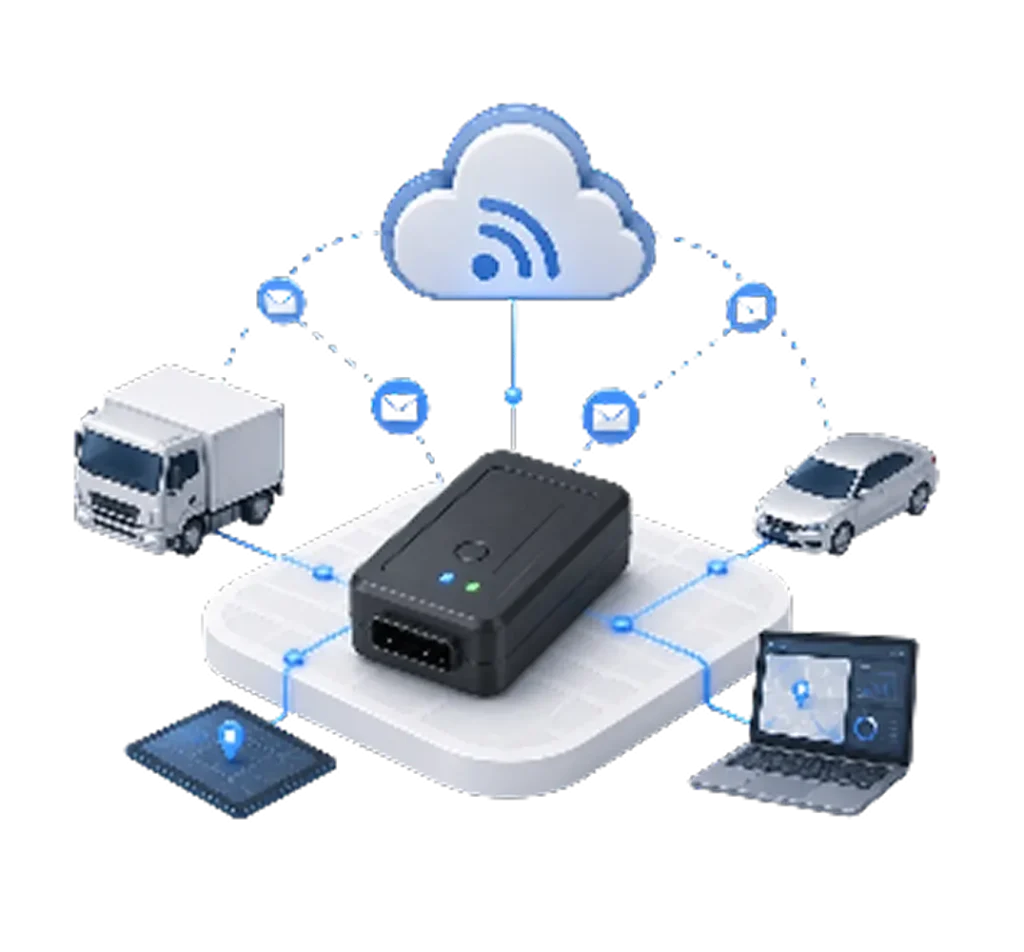
GPS tracking protocol solutions define how location, device status, alarms, and other tracking data are formatted and exchanged between GPS devices and management platforms. Supporting standard and custom protocols helps trackers integrate with different platforms, servers, and fleet management systems.
What Is GPS Protocol Customization?
GPS protocol customization defines the communication rules used between a GPS tracking device and a server or tracking platform. These rules determine how the device registers, reports positioning data, sends alarms, receives commands, and responds to server requests. Depending on the project, customization may involve message structure, data fields, device identifiers, reporting intervals, command formats, authentication, and response mechanisms. A customized protocol is particularly useful when a GPS tracker needs to communicate with an existing platform that does not fully support the device's standard protocol. Instead of changing the entire backend system, the device communication layer can be adapted to match the platform's existing data structure and interaction requirements.
Why Choose a Custom GPS Protocol?
A custom protocol can simplify integration when a customer's platform, server, or IoT system has specific communication requirements. Standard protocols such as JT808 and GT06 provide established message structures for common vehicle and GPS tracking applications, while MQTT and HTTP can be used for IoT-oriented or web-based data communication. When these protocols do not match the target system, a custom protocol can define the required data format and communication logic.
Protocol customization can also address project-specific requirements such as proprietary data fields, device authentication, command control, reporting rules, encryption methods, and server response formats. This gives customers greater control over how tracking devices communicate with their existing software infrastructure and allows the communication method to be designed around the actual integration requirements rather than forcing the platform to adopt an unsuitable protocol.
Supported Communication Protocols Types
Common GPS communication protocols include JT808, GT06, MQTT, Tianqin, HTTP, and custom protocols, with each suited to different integration environments. JT808 is widely used for vehicle telematics and fleet management in China, while GT06 is commonly found in GPS tracking devices and tracking platforms. MQTT uses a lightweight publish-subscribe architecture and is suitable for IoT applications where efficient data transmission is required.
HTTP can be used when GPS devices need to exchange data with web services through standard request and response methods. Tianqin protocol can support specific GPS tracking platform integrations, while Custom Protocol allows the message structure and communication logic to be defined according to project requirements. Selection should consider the existing platform, server architecture, data format, communication frequency, security requirements, and device capabilities.
Application Value of GPS Protocol Customization Solutions
GPS protocol customization helps connect tracking devices with existing software systems by adapting device communication to specific platform requirements, reducing integration barriers and improving deployment flexibility.
01
Accelerated Solution Deployment
Using an existing protocol such as JT808, GT06, MQTT, Tianqin, or HTTP can shorten the integration process when the target platform already supports the required communication format. When a standard protocol is unsuitable, a customized protocol can be defined around the customer’s existing interface requirements, reducing unnecessary changes to the backend system.
02
Reduced Development Costs
Protocol customization can reduce the need to redesign an existing tracking platform solely to accommodate a new GPS device. By adapting the device-side communication format to an established server interface, development teams can reuse existing data processing, device management, and platform functions while focusing development resources on the required protocol differences.
03
Enhanced System Compatibility
Customized protocols allow GPS devices to exchange data with different fleet management platforms, IoT systems, private servers, and third-party software. By defining compatible message structures, identifiers, commands, responses, and data fields, the tracker can better match the technical requirements of the target system and support integration across different software architectures.