



Custom JT808 GPS Tracker for Protocol Integration Solutions
Custom JT808 GPS tracking terminals for integration with vehicle monitoring and fleet management platforms. Support terminal registration, authentication, location reporting, heartbeat communication, parameter configuration, blind-area data retransmission, and protocol adaptation based on platform requirements.
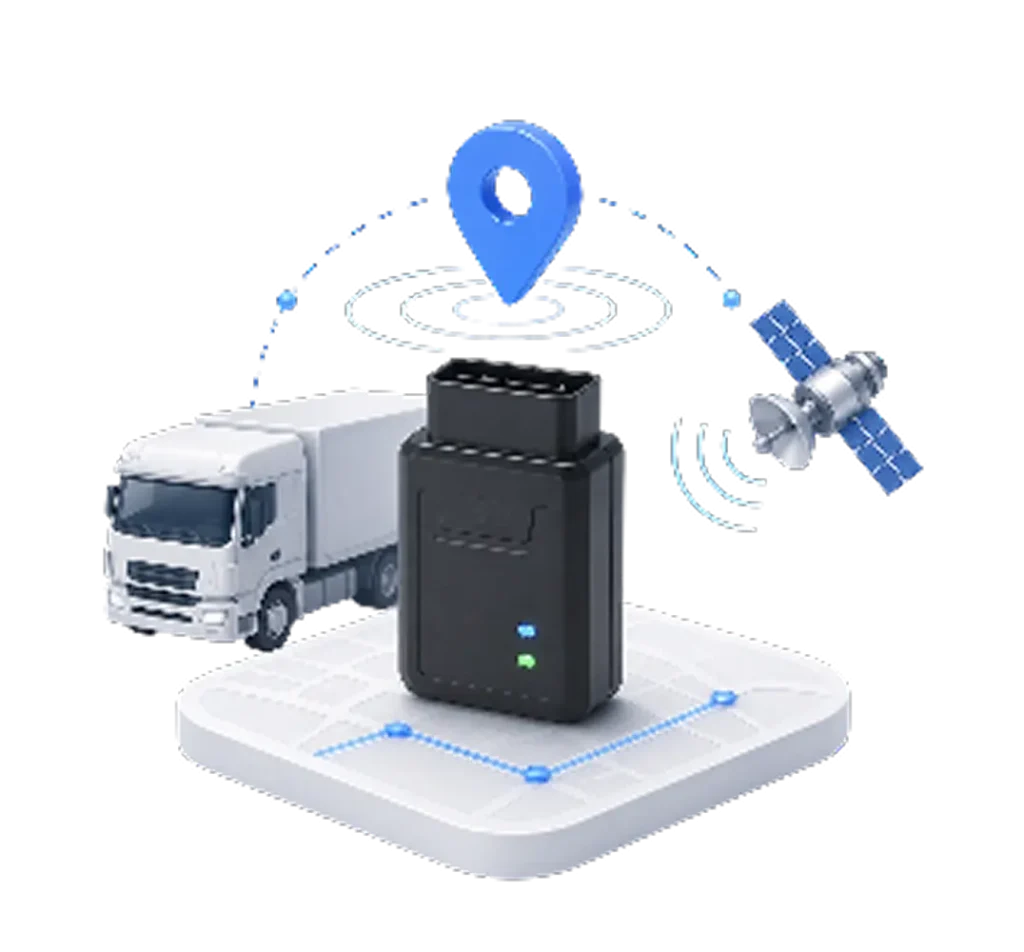
JT808 Protocol Technical Specifications
The JT808 terminal communicates with the monitoring platform through a defined message structure consisting of identification bits, a message header, message body, and check code. The protocol uses big-endian byte order and supports BYTE, WORD, DWORD, BCD, and GBK-encoded STRING data types. In the provided protocol implementation, TCP communication uses the platform as the server and the GPS terminal as the client.
Communication Architecture
Terminal as Client / Platform as Server
Communication Protocol
TCP
Network Byte Order
Big-Endian
Supported Data Types
BYTE / WORD / DWORD / BYTE[n] / BCD[n] / STRING
String Encoding
GBK
Message Structure
Flag + Header + Body + Check Code + Flag
Terminal Registration
Message ID 0x0100
Terminal Authentication
Message ID 0x0102
Location Data Reporting
Message ID 0x0200
Location Data Query
0x8201 Query / 0x0201 Response
Heartbeat Communication
Message ID 0x0002
Blind-Area Data Retransmission
Message ID 0x0704
JT808 Protocol Integration Capability
JT808 integration requires more than forwarding GPS coordinates to a server. The terminal and platform must use consistent message IDs, header structures, terminal identification, authentication, reporting parameters, acknowledgements, and data-field definitions. The protocol implementation can therefore be adapted around the customer’s platform communication requirements while maintaining the required terminal-to-server interaction logic.
01
JT808 Message Structure Adaptation
JT808 messages can be adapted according to the platform’s required data structure, including message ID, body properties, terminal number, serial number, message body, and check code. Message encapsulation, checksum calculation, escaping, and decoding must remain consistent between the terminal and server to ensure reliable parsing.
JT808 Message Field Mapping
JT808 Frame Layout Design
02
JT808 Command Interaction Development
Terminal-platform interaction can be developed around the message flows defined in the protocol, including terminal registration (0100), registration response (8100), authentication (0102), location reporting (0200), location query (8201), heartbeat (0002), and supported platform responses. This allows the GPS device and customer server to complete the required request, report, and acknowledgement cycles.
Command Link
JT808 Reply Flow
03
JT808 Standard Extension Development
The protocol provides additional location-information fields that can carry data beyond basic latitude and longitude. The supplied implementation defines extensions for mileage, fuel consumption, network signal strength, satellite count, temperature, 2G/4G base-station information, battery level, supply voltage, ICCID, G-sensor data, and device working modes, allowing supported terminal data to be incorporated into platform reporting.
JT808 Extension Rule Design
Standard Message Extension
Flexible GPS Terminal Compatibility
JT808 protocol adaptation can be applied to different GPS terminal configurations when the device hardware, firmware, network communication, and required data fields support the target integration. Before customization, the required terminal type, communication network, positioning data, power supply, sensor inputs, reporting strategy, and server interface should be confirmed to determine the appropriate protocol implementation.
Vehicle GPS Tracker
Vehicle GPS trackers are the primary device type addressed by the supplied JT808 implementation. The protocol can report vehicle position together with operational information such as ACC status, speed, direction, mileage, power status, and supported alarm data for fleet or vehicle monitoring platforms.
- Vehicle location data reporting
- ACC and power status reporting
- Speed and direction monitoring
- Vehicle alarm data support
4G GPS Terminal
The document defines additional information for 4G base-station data, including MCC, MNC, LAC, CELLID, and signal intensity. For a 4G GPS terminal, network configuration and server communication must be matched to the terminal hardware and the customer’s deployment environment before platform integration.
- 4G base station data support
- Cellular signal data reporting
- Server communication configuration
- Suitable for connected GPS terminals
Asset GPS Tracker
For compatible wireless GPS terminals, the protocol includes functions relevant to battery-powered tracking, such as internal battery information, timed reporting, dormant-state reporting intervals, and different device working modes. These fields can support asset-tracking applications where battery life and reporting frequency need to be balanced.
- Battery level data reporting
- Configurable reporting intervals
- Multiple terminal working modes
- Suitable for periodic asset tracking
Fleet Management Platform Integration
JT808 provides the communication layer between the GPS terminal and fleet management server. Integration covers terminal connection and authentication, location and vehicle-status reporting, heartbeat maintenance, server parameter configuration, platform responses, and supported control interactions, allowing tracking data to enter the customer’s existing fleet management system.

Vehicle Data Communication Integration
The terminal can report latitude, longitude, altitude, speed, direction, positioning time, vehicle status, and supported additional information through JT808 messages. The fleet platform parses these fields and converts terminal reports into usable vehicle location and operating data.
Fleet Server Communication Setup
Server communication parameters can include the master server APN, server IP address or domain name, backup server address, TCP port, and location-reporting strategy. Reporting can be configured by time, distance, or a combination of both according to the terminal parameters defined in the supplied protocol.
Remote Vehicle Management Support
JT808 data can support remote vehicle monitoring through location queries, status reporting, alarms, and supported platform commands. The supplied implementation includes vehicle states such as ACC, oil-circuit and main-power status, as well as alarms including overspeed, low voltage, power disconnection, vibration, and illegal displacement.
Supported JT808 Customization Services
JT808 customization can be planned around the customer’s terminal hardware and platform communication requirements rather than treating the protocol as a fixed plug-and-play interface. Typical work includes matching terminal reporting logic, server parameters, message fields, supported commands, and hardware-related data so that both sides interpret and respond to JT808 messages consistently.
01
Firmware Function Customization
Terminal firmware can be configured around supported JT808 behaviors such as authentication, heartbeat intervals, location-reporting strategies, dormant reporting intervals, and server communication parameters. This allows device operation and reporting frequency to be aligned with the intended tracking application.
02
Command Protocol Development
Command development focuses on ensuring that terminal and platform messages use the expected message IDs, body formats, acknowledgements, and response logic. This includes supported interactions such as registration, authentication, location queries, parameter settings, heartbeat responses, and text transmission.
03
Hardware Configuration Customization
Hardware-related JT808 data can be mapped according to the functions supported by the selected GPS terminal. The supplied protocol includes fields for positioning status, power status, network signal, satellite count, voltage, battery level, G-sensor data, and selected IO states, allowing protocol reporting to match compatible device hardware.
JT808 Custom Development Workflow
JT808 customization should begin by confirming the customer’s server specification, required message IDs, terminal functions, reporting fields, network environment, and hardware configuration. The protocol and firmware are then configured and developed, followed by device communication testing and platform integration. After terminal-to-server data exchange and required commands are verified, the approved configuration can move into deployment and mass-production delivery.
01
Customer Requirements
Confirm the GPS terminal type, server architecture, required JT808 messages, positioning data, reporting frequency, vehicle or sensor data, network configuration, and required platform commands before development begins.
02
Protocol Configuration
Define the terminal ID, server address, TCP port, authentication logic, message structure, reporting strategy, heartbeat interval, and required additional data fields according to the platform specification.
03
Software Development
Develop or adapt terminal firmware so that device registration, authentication, positioning reports, heartbeat messages, parameter handling, and required command interactions follow the agreed protocol configuration.
04
Device Testing
Test message encapsulation, checksum and escaping, terminal authentication, positioning reports, platform responses, heartbeat communication, parameter settings, and supported command interactions using actual terminal data.
05
Platform Deployment
Connect the tested terminal to the customer’s server and verify that the platform can correctly receive, parse, display, and respond to the required JT808 messages.
06
Mass Production Delivery
After the protocol configuration and terminal-platform communication are confirmed, the validated firmware and hardware configuration can be applied to production devices for batch deployment.
Platform Testing Support Service
JT808 platform integration should be verified through actual terminal-to-server communication rather than message-format documentation alone. Testing focuses on whether the device can connect, authenticate, report data, receive platform responses, maintain heartbeat communication, and recover required data after communication interruptions.
01
Communication Testing
Communication testing verifies whether the GPS terminal can establish the server connection, complete registration and authentication, maintain heartbeat communication, and continuously exchange supported messages with the platform.
02
Protocol Verification
Protocol verification checks message IDs, header fields, body length, terminal identification, serial numbers, checksum calculation, escaping, field encoding, and platform responses. This helps identify parsing differences between terminal firmware and the customer’s JT808 server before deployment.
03
Platform Debugging Support
Platform debugging focuses on actual data exchange between the GPS terminal and customer server. Location reports, acknowledgements, parameters, commands, and abnormal-network scenarios can be checked step by step to locate integration issues. The supplied protocol also supports blind-area retransmission, where unsent location reports are stored during communication failure and uploaded after the link returns to normal.

JT808 Customization Project Cases
JT808 customization cases can demonstrate how different GPS terminals are adapted to customer fleet platforms, including terminal communication requirements, protocol configuration, required data fields, testing issues, and final deployment results. For each case, it is more useful to show the actual integration problem and solution than simply list the device model or customer industry.
TABLE OF CONTENTS
Contact RJM Team
Have questions about GPS tracking solutions or need guidance choosing the right product? Our team will respond with expert recommendations within 24 hours.