



Custom HTTP Protocol GPS Tracker for Integration Solutions
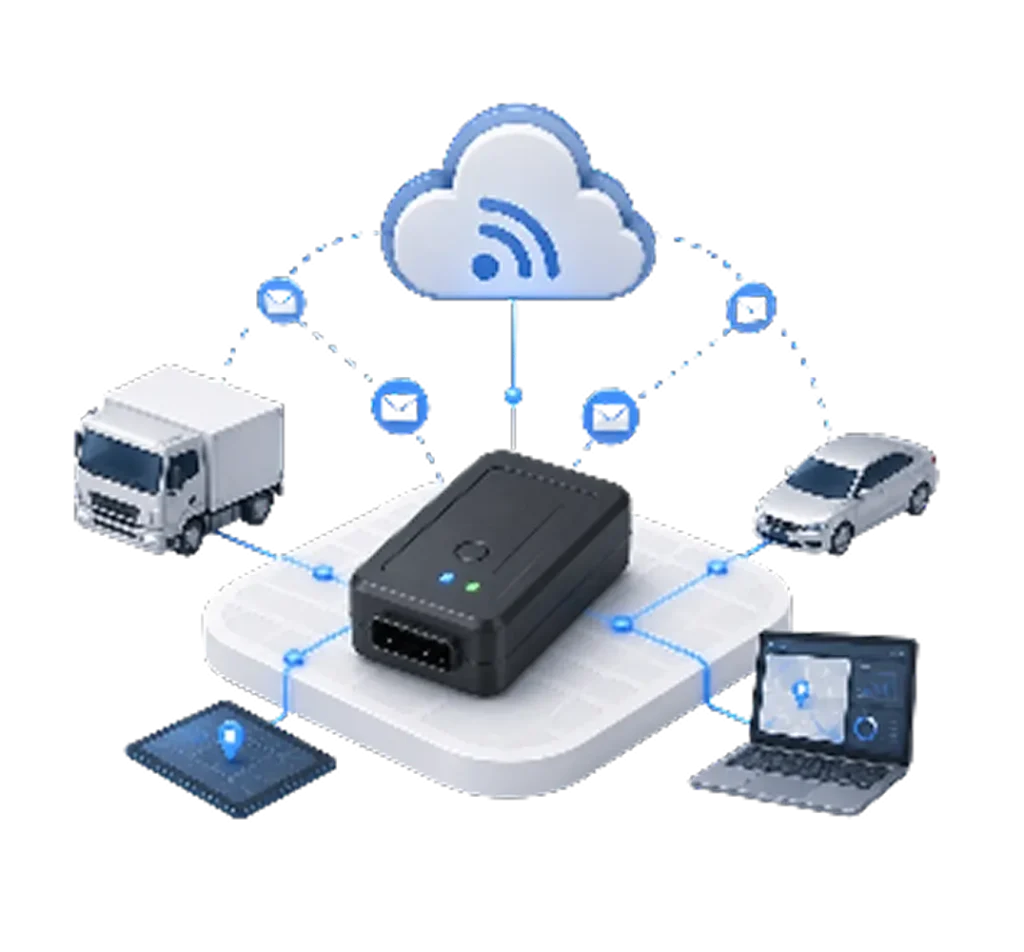
Integrate GPS tracking data with your existing system through HTTP WebHook delivery. The platform pushes device identification, location time, positioning status, battery level, and coordinates to a customer-defined Callback URL using HTTP POST requests with JSON-formatted data.
HTTP Protocol Technical Specifications
The HTTP integration uses a WebHook-based push model in which the customer provides a publicly accessible Callback URL and the platform sends positioning records through HTTP POST requests. The receiving system must accept JSON message bodies and parse the included device, location, status, battery, and coordinate fields according to the defined data structure.
Integration Type
WebHook Data Push
HTTP Method
POST
Payload Format
JSON
Callback Endpoint
Customer-Defined URL
Network Requirement
Publicly Accessible Endpoint
Batch Push Limit
Max. 1,000 Records per Batch
Device Identifier
publicKey
Device MAC Field
privateKey
Location Time Field
collectionTime
Position Status Field
status, Range 0–255
Battery Level Field
batteryLevel, Level 0–15
Coordinate Field
Longitude, Latitude String
HTTP Protocol Integration Capability
The HTTP WebHook interface is designed to move GPS location data from the tracking platform into the customer’s own software environment without requiring manual export. Integration mainly involves configuring the Callback URL, opening network access, receiving JSON payloads, and mapping the returned device and location fields into the customer’s database or business application.
01
HTTP Protocol Adaptation
HTTP integration can be adapted around the customer’s receiving endpoint and internal data structure. The receiving server needs to expose a public Callback URL, accept POST requests, and map fields such as device ID, collection time, positioning status, battery level, and coordinates into the required application format.
HTTP Message Adaptation
Custom HTTP Profile Support
02
HTTP Communication Support
The platform pushes data through HTTP POST rather than requiring the customer system to repeatedly poll for location records. This makes the interface suitable for applications that need tracking data to enter their own system automatically as the platform generates push events.
Request Handling
Response Processing
03
API Interface Integration
The JSON payload provides structured fields that can be parsed by the customer’s API service and then written into databases, dashboards, maps, or business applications. The documented fields include publicKey, privateKey, collectionTime, status, batteryLevel, and coordinate.
GPS API Interface Integration
Tracker API Endpoint Mapping
Flexible GPS Terminal Compatibility
Because this document defines the data-push interface between the tracking platform and the customer system, terminal compatibility depends primarily on whether the selected GPS device can report the required data to the upstream tracking platform. Once the platform has normalized the device data, the HTTP interface can forward the defined fields to the customer’s Callback URL.
Vehicle GPS Tracker Compatibility
Vehicle GPS tracking data can be delivered to a customer system through the HTTP WebHook when the connected platform receives compatible terminal records. The receiving application can use device identification, positioning time, coordinate data, battery information, and location status for vehicle location display or business processing.
- Device ID data delivery
- Location timestamp support
- Longitude and latitude reporting
- Position status data available
Asset GPS Tracker Compatibility
Asset-location records can be pushed into inventory, logistics, or asset-management systems through the same HTTP JSON interface. This allows customer applications to associate a device with an asset and process the latest reported position and battery information without manually exporting tracking data.
- Supports asset location data
- Device identity field included
- Battery level data available
- Easy backend data mapping
IoT GPS Device Compatibility
IoT tracking devices that are already supported by the upstream platform can use the WebHook interface to pass normalized positioning data to third-party systems. This separates device communication from application integration, reducing the need for the customer platform to directly parse every device protocol.
- JSON-based data delivery
- Suitable for backend integration
- Simplifies application-side parsing
- Supports centralized data transfer
Flexible Platform Integration Support
The WebHook interface is suitable for customers that already operate their own tracking, IoT, logistics, or asset-management systems and only need standardized GPS data delivered into those systems. Instead of replacing the existing platform, the customer can expose a receiving endpoint and process incoming JSON data according to its own business logic.

Existing Tracking Platform Integration
An existing tracking platform can receive HTTP location pushes through a dedicated Callback URL and map the returned device and coordinate fields into its own tracking records. This approach helps retain the existing front-end, database, user accounts, and business workflow.
API Interface Integration
Customer APIs can parse the JSON message body and convert the incoming fields into internal database or service formats. The integration is particularly straightforward when the receiving system already supports REST-style HTTP endpoints and JSON parsing.
Third-Party Platform Connection
Third-party business platforms can receive the same push data when they provide an externally accessible HTTP POST endpoint. The location data can then be used in logistics dashboards, IoT systems, asset-management platforms, or other applications according to the customer’s processing logic.
Supported HTTP Customization Services
HTTP integration customization should focus on how GPS data is delivered and mapped into the customer’s system, including Callback URL configuration, JSON field handling, device identification, batch processing, network access, and platform-side data parsing. The current document defines a push-data interface rather than a complete bidirectional remote-control protocol.
01
Firmware Function Customization
The uploaded document does not define GPS terminal firmware behavior directly. If firmware-level customization is required, the terminal’s own communication protocol, reporting frequency, power management, and supported data fields would need to be confirmed separately before development.
02
Command Protocol Development
The current HTTP WebHook specification only defines platform-to-customer location data push through HTTP POST and does not define customer-to-device command delivery. Remote command development would therefore require an additional command API or terminal protocol specification and should not be presented as a standard function of this document.
03
Hardware Configuration Customization
Hardware configuration is also outside the scope of the current WebHook document. If different GPS devices need to report additional sensor, battery, or status data, those fields should first be supported by the terminal and tracking platform before they can be added to the customer-facing HTTP data structure.
HTTP Custom Development Workflow
HTTP integration begins by confirming which GPS data the customer needs and where that data should be delivered. The customer then provides an externally accessible Callback URL, after which the push interface is configured, tested with actual JSON payloads, verified for field parsing and batch processing, and finally deployed into the customer’s production environment.
01
Customer Requirements
Confirm the target system, required device fields, expected data volume, Callback URL, network security requirements, and how the customer application will process incoming positioning records.
02
Protocol Configuration
Configure the Callback URL and confirm the HTTP POST endpoint, JSON structure, supported fields, IP whitelist or firewall settings, and expected response handling.
03
Software Development
Develop the customer-side receiving service to accept JSON payloads, validate incoming data, parse required fields, and store or forward positioning records into the target application.
04
Device Testing
Use actual device-generated location data to verify that the tracking platform produces the required WebHook records and that identification, time, status, battery, and coordinate values can be correctly received.
05
Platform Deployment
Deploy the Callback service to a publicly accessible environment and add the platform server IP to the customer firewall or whitelist where required. The document specifically states that the platform IP should be permitted through the firewall.
06
Mass Production Delivery
After data reception and parsing are verified, compatible tracking devices can be added to the deployment according to the agreed hardware and upstream platform configuration.
Platform Testing Support Service
HTTP platform testing focuses on whether location records can travel reliably from the tracking platform to the customer system. Testing should cover endpoint accessibility, POST request handling, JSON parsing, field mapping, batch delivery, firewall access, and actual processing of incoming positioning records.
01
Communication Testing
Communication testing confirms that the customer Callback URL is publicly reachable and accepts HTTP POST requests from the platform server. Firewall or IP restrictions should also be checked before testing data delivery.
02
Protocol Verification
Protocol verification checks whether the receiving system correctly parses publicKey, privateKey, collectionTime, status, batteryLevel, and coordinate. It should also verify the documented ranges and conversion logic before storing the values in the customer system.
03
Platform Debugging Support
Platform debugging traces the complete push process from platform generation to Callback reception and application processing. For large data volumes, testing should also confirm that the receiving service can correctly process batches of up to 1,000 records without losing or duplicating data.

HTTP Customization Project Cases
HTTP customization cases should show how GPS data is connected to a customer’s actual business system, such as a logistics platform, asset-management system, IoT dashboard, or internally developed tracking application. A useful case should explain the original data requirement, Callback configuration, field mapping, data volume, testing issues, and final integration result.
TABLE OF CONTENTS
Contact RJM Team
Have questions about GPS tracking solutions or need guidance choosing the right product? Our team will respond with expert recommendations within 24 hours.