



Custom Tianqin Tracking Terminal for Protocol Integration
Custom Tianqin GPS tracking terminals for integration with existing tracking and vehicle management platforms. Support GPRS/TCP communication, GPS and base-station data reporting, vehicle status monitoring, remote command interaction, and protocol adaptation according to the customer’s server and terminal requirements.
Tianqin Protocol Technical Specifications
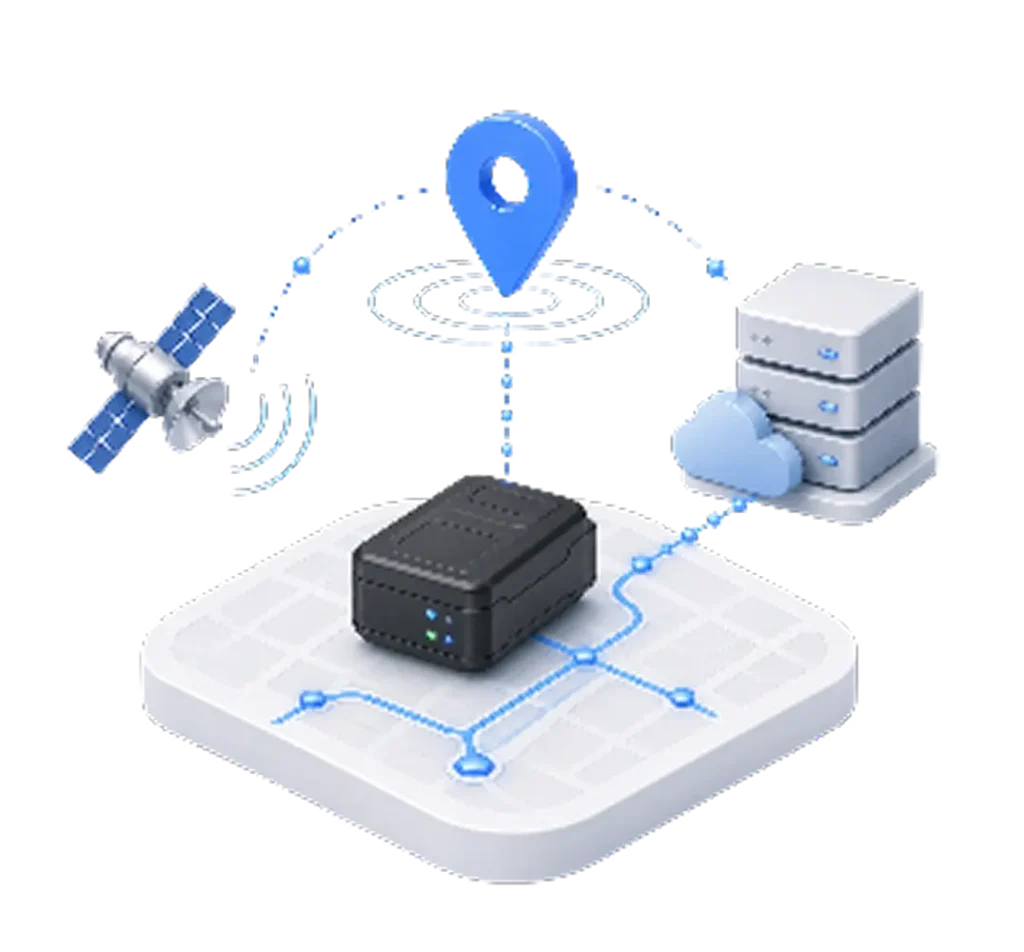
The Tianqin protocol defines communication between GPS vehicle terminals and tracking servers through GPRS/TCP. It supports GPS positioning, vehicle status reporting, base-station information, server-issued commands, terminal responses, and remote vehicle control functions, providing a structured communication framework for device-to-platform integration.
Communication Mode
GPRS / TCP
Command Header
\*
Binary Record Header
$
Terminal Serial Number
10 Digits
Heartbeat Data Type
V1
Address Request Type
V2
Command Response Type
V4
GPS Validity Flag
A / V
Latitude Format
DDFF.FFFF
Longitude Format
DDDFF.FFFF
Vehicle Status Field
4 Bytes
Network Data Fields
MCC / MNC / LAC / Cell ID
Tianqin Protocol Integration Capability
Tianqin protocol integration focuses on matching the terminal’s reporting format, vehicle-status fields, network parameters, and server command structure with the customer’s tracking platform. The protocol supports GPS location, speed, direction, vehicle status, MCC/MNC/LAC/Cell ID information, and two-way command interaction, allowing terminals to be adapted to existing server workflows instead of requiring a completely new platform.
01
Tianqin Protocol Adaptation
Protocol adaptation can cover manufacturer codes, terminal serial numbers, data types, GPS fields, vehicle-status data, network identifiers, and command structures. Since the terminal checks whether the manufacturer code matches the server command, both sides need to use consistent protocol parameters before command interaction can work correctly.
MQTT Broker Session Setup
Broker Connection Handling
02
Data Communication Integration
The terminal can report GPS validity, latitude, longitude, speed, direction, date, vehicle status, and cellular network information such as MCC, MNC, LAC, and Cell ID. These fields can be parsed by the tracking server to build vehicle location, status, and network-monitoring functions.
Topic Pub/Sub
Message Flow Hub
03
Platform Interface Integration
The protocol supports server-to-terminal commands using the structure *XX,YYYYYYYYYY,CMD,HHMMSS,PARA…#, while the terminal can return a V4 response containing the confirmed command, device time, GPS data, vehicle status, and network information. This allows the platform to verify whether supported commands have been received and executed by the terminal.
MQTT Payload Schema Tailoring
Custom Topic Data Formatting
Flexible GPS Terminal Compatibility
Tianqin protocol adaptation can support different GPS terminal configurations as long as the device hardware, firmware, network communication, and required protocol fields are compatible. Before deployment, the terminal model, cellular network, supported vehicle interfaces, power configuration, sensor functions, and required commands should be confirmed so the protocol implementation matches the actual hardware.
Multi-Model GPS Terminal Compatibility
The protocol can be adapted to different vehicle tracking terminal models by mapping the supported positioning, vehicle-status, alarm, and control functions into a consistent server communication format. Hardware differences should be handled through firmware configuration rather than assuming every terminal supports the same data fields.
- Supports multiple terminal models
- GPS and vehicle status reporting
- Flexible hardware function mapping
- Adaptable firmware configurations
Multi-Network Communication Support
The Tianqin data format includes MCC, MNC, LAC, and Cell ID fields for reporting cellular network information to the platform. This allows the server to receive both GPS positioning data and basic network-location information from compatible terminals operating across different mobile network environments.
- MCC and MNC data reporting
- LAC and Cell ID support
- Cellular network information upload
- Suitable for mobile GPS terminals
Protocol Adaptation and Function Expansion
The protocol includes standard location and status reporting together with server-issued vehicle-control commands, allowing supported functions to be expanded through firmware and command adaptation. Examples in the document include reporting-frequency settings, fuel/power cut-off, arming, ignition control, door control, and vehicle search.
- Reporting interval customization
- Remote control command support
- Vehicle alarm function expansion
- Firmware-based feature adaptation
Flexible Platform Integration Support
Tianqin terminals can be integrated with customer-developed or existing tracking platforms by matching the server-side parser, command format, terminal identification, and response logic. Integration should focus on how the platform receives location and status data, sends control commands, and verifies terminal responses rather than only confirming that both sides use the same protocol name.

Customer Platform Integration
For a customer-developed platform, the server should parse Tianqin location, vehicle-status, and network fields according to the agreed packet format. The platform should also generate commands using the required manufacturer code, terminal identifier, command number, time, and command parameters.
Hardware Platform Adaptation
The protocol can be mapped to the specific functions available on the selected tracking hardware. Vehicle status bits can represent conditions such as GPS receiver failure, vibration alarm, ACC state, power loss, low battery, overspeed, SOS, illegal ignition, and door-related alarms, depending on the terminal configuration.
Existing Tracking Platform Integration
Existing tracking systems can integrate Tianqin terminals by adding support for the protocol’s ASCII and binary record formats, positioning fields, vehicle-status structure, and server command responses. This allows customers to retain their existing tracking interface while adding compatible Tianqin devices.
Supported Tianqin Customization Services
Tianqin customization can be implemented at firmware, command, and hardware-integration levels according to the customer’s terminal and server requirements. The key is to define which location fields, vehicle states, alarms, remote commands, and hardware functions are actually needed before development begins.
01
Firmware Function Customization
Firmware can be customized to control positioning uploads, heartbeat or periodic reporting, alarm reporting, GPS validity handling, vehicle-status mapping, and other terminal behaviors. The goal is to align device reporting logic with the customer platform’s required data frequency and management workflow.
02
Command Protocol Development
The document defines multiple server-issued commands that can be developed or adapted according to terminal capabilities, including ACC reporting interval settings, fuel/power cut-off, arming/disarming, remote ignition, remote door control, and vehicle search. Custom command development should confirm the command format, parameters, execution logic, and terminal response.
03
Hardware Configuration Customization
Hardware-related protocol fields can be configured according to the actual GPS terminal, including backup battery status, ACC, vehicle power, door status, SOS input, vibration detection, ignition-related functions, and supported vehicle-control outputs. Only functions physically supported by the selected hardware should be enabled in the protocol.
Tianqin Custom Development Workflow
Tianqin customization should begin by confirming the customer’s server architecture, terminal hardware, protocol fields, vehicle data, command requirements, and network environment. Development then moves through protocol configuration, firmware implementation, device testing, platform integration, and final production validation.
01
Customer Requirements
Confirm terminal type, network environment, required GPS data, vehicle-status fields, alarms, remote-control functions, reporting frequency, and customer server specifications.
02
Protocol Configuration
Define manufacturer code, terminal identifier, packet structure, data types, GPS fields, vehicle-status mapping, network fields, command formats, and response requirements.
03
Software Development
Develop or adapt terminal firmware to generate the required Tianqin packets, process server commands, update vehicle states, and return the corresponding command responses.
04
Device Testing
Test GPS data, network fields, status bits, alarm reporting, server commands, terminal responses, and actual hardware actions using the target terminal.
05
Platform Deployment
Connect the tested GPS terminal to the customer’s server and verify that the platform correctly receives, parses, displays, and responds to Tianqin protocol data.
06
Mass Production Delivery
After protocol communication and device functions are approved, the validated firmware and hardware configuration can be applied to production units for batch deployment.
Platform Testing Support Service
Platform testing should verify the complete terminal-to-server communication chain, including positioning data, vehicle status, network information, command delivery, device responses, and hardware execution. Testing with actual terminals is especially important because protocol fields alone cannot confirm whether a remote-control command is correctly mapped to the corresponding hardware function.
01
Communication Testing
Communication testing verifies whether the terminal can continuously report positioning and status data to the server and whether the platform can correctly identify the terminal and process its messages. Testing should also confirm the selected periodic reporting behavior defined for the deployed firmware.
02
Protocol Verification
Protocol verification checks command headers, manufacturer codes, serial numbers, data types, GPS validity, coordinate formats, vehicle-status fields, network parameters, delimiters, and packet endings. Both ASCII *…# packets and hexadecimal $… records should be parsed according to their respective formats.
03
Platform Debugging Support
Platform debugging verifies two-way interaction between the server and GPS terminal by checking command transmission, terminal execution, and V4 response data. For example, the document provides command and response formats for remote fuel/power cut-off, ignition control, door control, and other supported vehicle functions.

Tianqin Customization Project Cases
Tianqin customization cases should focus on the actual integration problem and implementation result, such as adapting an existing tracking platform, adding specific vehicle-control commands, mapping custom vehicle-status fields, or integrating a new GPS terminal model. Each case should explain the original requirement, protocol changes, terminal functions, testing process, and final deployment outcome.
TABLE OF CONTENTS
Contact RJM Team
Have questions about GPS tracking solutions or need guidance choosing the right product? Our team will respond with expert recommendations within 24 hours.